
I am a middle-aged, retired real estate lawyer seeking more out of life. It is my heart-felt belief that it is only in knowing God, and loving him more deeply that humanity can truly find happiness. This blog reflects my thoughts on what this knowing and loving should be, and how to cultivate this relationship.
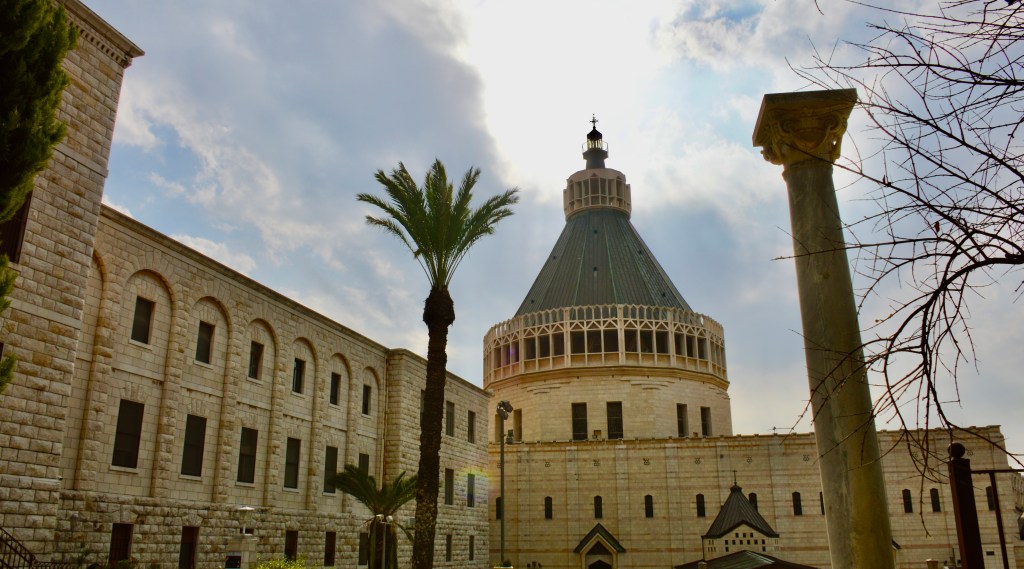
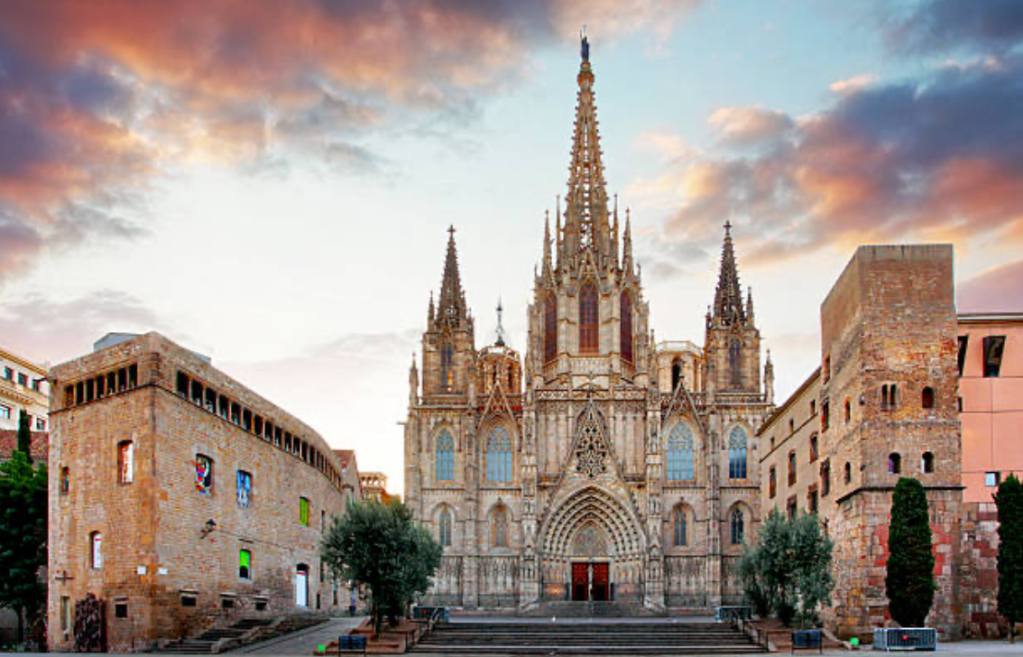
This morning, I read 1 Peter 2:1-17, and the concept of Jesus’ followers being built into a spiritual edifice grabbed my attention. While this passage is typically translated as “a spiritual house,” I think the word edifice better describes what is happening to us.
I need to explain two points so you can follow my logic. First, what is an edifice? After studying a few dictionaries, it seems a comprehensive best definition is – an impressive structure that is often massive in size. In other words, it isn’t just a house or typical structure. It is something more grandiose.
Second, we need to understand that being a member of Christ’s body is not a metaphorical statement. In baptism, we die and rise with Christ. Col 2:12. In fact, Paul regularly talks about the spiritual life as a life lived “in Christ.” (e.g., Gal 2:16-20). Thus, in some mystical way, we really are living stones being built into a spiritual edifice.
So, why was this phrase an invitation to dialogue with the Holy Spirit this morning? I think it was for more than one reason, but the applicable fruit here is that humans seem to have a deep longing to attain a higher purpose, to find some personal sense of accomplishment, to achieve something that is a legacy we can leave behind, or something along these lines. In its basic form, this longing is not wrong because we were created to seek something greater. The problem is that our fallen nature wants the “something greater” to be about me, the individual. As I said above, that individual died in baptism. The longing that exists within us exists because we were created to quest for God and to find our true meaning and purpose in the great spiritual edifice, the body of Christ.
When I look out at the world, there are many people, me included, who experience a lot of pain trying to make sense of the world, why they were created; why they exist. The reason we have so much pain is that we were meant to share in the greatness of Christ, not to possess something akin to his greatness on our own merit. The more we look to soothe the pain of our existence in worldly things, the more painful this existence will be. The only eternally effective salve for this pain is to allow the Holy Spirit to more and more fully incorporate us into the life of Christ.
Here is where I need to share the good and the bad news. Let’s start with the bad news. The only way to be incorporated into Christ’s body is through suffering. It is through our practices of dying to self and carrying our crosses that we allow the Holy Spirit to heal the interior wounds that cause us to quest after personal greatness.
The good news is that this work is done in Christ. In him, our burden is light. In him, we experience the joy of living as we were created to live. In him is our glory, our peace, and our joy.
My prayer for you today is that you open yourself to the work of the great contractor, the Holy Spirit, and allow him to shape and mold you into this edifice. I pray that you allow your great longing for greatness to be appeased in Christ.
Dear child of mine, I invite you to curl up in my lap and sit in the light of my love and mercy. I know you are concerned and in deep emotional pain. I know that you are afraid to trust me because so many people have broken your trust. I know it is hard to trust me because my ways are not like human ways. You often feel betrayed when I don’t love you the way you expect me to, and I know that you are not yet able to understand my language of love.
So, come, curl up in my lap and rest. Let me sing comforting songs to you. Let me assure you that you are not alone and that you will not drown when you feel as though you are about to be overwhelmed by the raging waters of the sea. I am right here with you.
If you could only see how you are bound, like one tied up in a fishing net that is being tossed and turned on the raging waters of the sea. You cannot see all of the ropes that make up the net, but you can see ropes that seem more life-threatening to you than the other ropes. I ask you to trust that I sometimes have to loosen a rope that is more dangerous than others before I get to the one that frightens you the most. The fact that I am not untying the one that frightens you doesn’t mean that I am not at work or that I want you to sit in fear. I just need a little more time to take care of the ones that are a more serious threat to you right now.
I ask you to do your best not to panic or pull on the ropes in your fear and confusion. I need you to rest patiently while I work my way to that rope that frightens you. Otherwise, you get more entangled in the net, and it will take longer for me to get you out. At the same time you need to trust that no matter how much you struggle against the net, I will get you out. It will go faster if you just do your best to be patient. Come, sit in the light of my love, and find peace in me, your beloved one. Know that I have your eternal best in mind at all times. Know that I long for your joy and happiness more than you can ever know. Hold on to faith, to hope, and most importantly, to love.
Come, sweet child. Climb up into my lap and get some rest. Climb up here and sleep in the knowledge that I love you and will watch over you. Come, sweet child, and get your rest in me.
In John’s Gospel, we hear Jesus say, “Now is the Son of Man glorified, and God is glorified in him. If God is glorified in him, God will also glorify him in himself, and God will glorify him at once. My children, I will be with you only a little while longer. I give you a new commandment: love one another. As I have loved you, so you also should love one another. This is how all will know that you are my disciples, if you have love for one another.” John 13:31-33a, 34-35. This made me stop and ponder the meaning of the word glory – a manifestation of power and/or might. In scripture, this happens in a few different ways. For instance, we read about God’s glory being manifested in physical phenomena like a pillar of fire, a cloud settling on the top of Mt. Sinai, and the like. We also hear stories of the Israelites regularly defeating larger and more powerful armies with God’s help. In addition, when Moses asks to see God’s glory, God tells him: “I will make all my goodness pass before you.” These seem like easy to understand examples based on the above definition of glory.
When we turn to the New Testament, however, we start to understand that God actually defines glory in a very different way. In fact, when you look at the larger context of this passage, the stories surrounding this one, you start to see that God’s glory is made manifest in Jesus’ passion and death. While the overall text includes the resurrection, the primary focus is on his death on the cross; his being raised up on the cross. God’s power and might is revealed in Jesus on the cross. This is one of those times that we see how God’s ways are not our ways. Isaiah 55:8-9. No human would think to express power and might in weakness.
Is it any wonder that the “Jews” of Jesus’ time struggled to understand the glory of God hanging on a cross? It is difficult to see past the horror of the cross, to see God’s glory being made manifest in Jesus’ infinite love and mercy. Even today many people fail to see God’s glory in his sacrificial love on the cross. Many only see the rejection and humiliation, not the love behind his willingness to be tortured and murdered by those he created without punishing them. They don’t see the blessings received by those who believed in the gift of eternal life purchased for them in his life, death, and resurrection. Only God would reveal his glory in love instead of power and might.
Now that we understand how God’s definition of glory is different from our understanding, we can also see that his definition of love transcends our understanding. Human love is often described as an “emotion, a sentiment, or personal attraction. (Lewis, 347). God’s definition is sacrificial love. Whereas human love often looks to how something or someone makes them feel; to how others are creating for them a sensation that they experience as love, God’s divine love is “practical, dynamic, and demanding.” (Lewis 347). It is for the benefit of the other, not for self. This is important because if we do not take the time to understand God’s love, if we only love as humans love, we will fall short of following his commandment to love as he loves.
While I don’t normally mix theology across Gospels in order to respect the beauty by which each author expresses the good news, I think this is a good opportunity to do so. Matthew’s Gospel says Jesus came to fulfill the law, not to abolish it. Mt 5:17. The theme of love was not new to the Jews. In fact, when we ponder the Ten Commandments we see that they are concrete ways of loving God and neighbor. However, as we see in the Pharisees and other Jewish leaders at the time of Jesus, the Jews spent more time focusing on their “dress, diet, rituals,” and other observances of the law to externally express their lived relationship with God. (Lewis, 347). While these outward signs helped Gentiles know that a person was an Israelite, a child of God, they fell short of the spirit of the OT law of love.
In Jesus, we see the fulfillment of the law of love in the way that he radically changed our understanding of love by making it other-focused, even to the point of death. No longer is covenantal living solely expressed in our observance of the ten concrete examples of love. His love goes way beyond these examples. We are no longer solely set apart by our outward practices of diet, dress, and rituals. We are also called to set ourselves apart by loving others as Jesus loves. We are called to be known by our other-worldly practices of love.
In closing, I want to point out one of the most remarkable phrases in this passage. Jesus knew that the disciples were struggling. Just like us, their human concepts of glory and love prevented them from fathoming the radical ways in which Jesus re-interpreted these concepts in his life. He knew they would stumble in their confusion, and tenderly reassured them by calling them his “little children.” He knew they would abandon him. He knew how they would struggle, but despite their “misunderstanding, ignorance, and failures,” they always remained his little children. (Moloney, 385). We, too, remain his little children as we learn to live this radical way of life. We, too, will make mistakes and stumble in our confusion, but with the help of the Holy Spirit, little by little we will be the means through which God reveals his glory, his love, in our time and space.
In Christ,
dw
Inspirations:
Dianne Bergant and Robert J. Karris, The Collegeville Bible Commentary: Based on the New American Bible with Revised New Testament (Collegeville, MN: Liturgical Press, 1989), 1004.
Scott M. Lewis, “The Gospel according to John,” in New Testament, ed. Daniel Durken, The New Collegeville Bible Commentary (Collegeville, MN: Liturgical Press, 2009), 346–347.
Francis J. Moloney, The Gospel of John, ed. Daniel J. Harrington, vol. 4, Sacra Pagina Series (Collegeville, MN: The Liturgical Press, 1998), 21, 385–389.
George R. Beasley-Murray, John, vol. 36, Word Biblical Commentary (Dallas: Word, Incorporated, 1999), 246–248.
Scott Hahn, ed., “John’s Gospel,” Catholic Bible Dictionary (New York; London; Toronto; Sydney; Auckland: Doubleday, 2009), 461.
Scott Hahn, ed., “Glory,” Catholic Bible Dictionary (New York; London; Toronto; Sydney; Auckland: Doubleday, 2009), 314.
Yesterday I heard a comment about how humans tend to love themselves conditionally. It made me stop to consider whether I agreed with the statement or not. First, when I think about self-love it tends to be a derogatory term because it usually refers to one who is proud and puts themselves first. The form of love being spoken of in the statement was a different type of self-love.
I had to ask myself – do I love myself? I felt resistance. I like myself, but would I go so far as to say I loved myself? Hmm. When I asked myself why this question was so hard to answer, I realized I had to agree with the original statement. My love of self is, to some degree, conditional.
What does it mean to conditionally love oneself? It means when I am behaving how I should behave and do what I am supposed to do then I can love myself. I didn’t even realize I was doing that. It was all rooted in my subconscious.
As I continued to ponder this, I remembered hearing that God’s love is unconditional. God loves me no matter what I do or how I behave. He wants more for me, but he loves me no matter what. Scripture tells us that God created us good. We know that we can never lose that original goodness. It’s why baptism can wash our sins away. My created self is like pure gold, not a gold bar riddled with impurities. Sin is like mud and muck sticking to every part of the exterior shell of the bar. The mud and muck can be washed away.
From here I can posit that my conditional self-love means I view myself as the muck, not the gold. The less muck the more self-love. God sees behind the muck and loves the essence of the created being. God wants us to stop covering our natural essence in muck. He wants us to see the beauty and amazing attributes of the person he created each of us to be. He wants us to see past the muck when looking at others and love them for the precious person he created in them, too.
How about you – are you conditionally loving the muck or unconditionally loving the amazing creature that lies beneath? Taking this further and ask – how do you think God views you? You may say that you know God loves you, but does the conditional love idea creep into your subconscious? Do you project that onto the God who created you and wants you to live the life you were always meant to live? Do you live a life believing you have to behave a certain way to ensure that God loves you at all times? If so, stop and remember that no matter what you do God will always love you and that he gives you permission to love yourself unconditionally, too.
Sometimes it looks like there are two models for being Christian. Some people seem to accept God’s free gift of salvation and go about their lives having faith in the free gift. In this model, there is a heavy focus on being saved. The second prevalent model seems to be that one is still a sinner and has to wait until Heaven to live in the joy of salvation. In this model, there is a heavy focus on “still sinner” and the need for penitential acts, practices of virtue, and the like.
Paul seems pretty clear that both are true. We are saved while still sinners. Rom 5:8. The free gift is offered to all humans, and one chooses to accept it at baptism. However, acceptance isn’t enough for Phil 2:12 tells us that we must work out our salvation, and this is where the two apparent models melt into one. Phil 2:12 means that there is more to it than being baptized. At the same time, there is a big difference between “working it out” and “working for it.”
How can we make sense of this? I would suggest Phil 2:12 can be understood as unpacking the gift of salvation, and we unpack it through our penitential acts, practices of virtue, and the like. Let me see if I can further explain my thought process. I once read that God is good – image of God – and God does good – likeness of God. I wish I could find the source to provide a proper reference, but I like this definition of what it means to be created in his image and likeness. Gen 1:26-27. No matter what we do, we cannot change the fact that our essence is good – image. It is our behavior, our likeness, that is in question. Thus, our spiritual life is about unpacking the gift of salvation, which restores our likeness to God.
So, how do we unpack this gift? We unpack it by dying to self and carrying our crosses (penitential acts, virtue, and the like) Mark 8:34. We suffer with Christ so as to share in his glory. Rom 8:13. I would strongly note that suffering is not about suffering for the sake of suffering. It is about being conformed to Christ. Rom 8:29 It is about surrendering all of the things that keep us from living in the likeness of Christ who is good and does good. It is about allowing the Holy Spirit to heal our disordered desires and anything else that causes us to behave improperly.
In closing, I would encourage you to unpack your gift of salvation with joy. While it may not come easy to experience joy in suffering, it does become easier when we constantly remember with awe and reverence that God saved us even though we were still sinners.
I recently summarized a prayer journal from last month, and I came across something that had a significant impact on me. God and I were talking about marriage and how baptism is the means by which we are espoused to Christ.
While I was typing the summary, an image came to mind. It was an image of a spouse busily trying to appease the other. There was a lot of anxiety around the work. There was a lot of fear about not getting it just right. I asked, “God, is this one of those images you use to talk to me?” All of a sudden I realized that this was an image of how some people are living the spiritual life. They hastily run around hoping to earn God’s love, forgiveness, generosity, and mercy. I had this intense feeling that God wanted people to know that he is not an abusive spouse. Later, I shared this image with a friend of mine. We pondered how many people believed in a God who judges each and everything we do. How they walk through life in fear of God’s temper and how he might punish them. They walk through life in fear of an eternity in hell.
While we were talking, I had a new image, the image of a wife caring for her husband out of love. She did all the cooking, cleaning, and the like as an expression of her love for the spouse. The husband would offer to help, but she told him she had everything under control. Her understanding of love was about taking care of everything for the other.
Both of these images of God fall short because love is not only a voluntary gifting of self to the other out of love, but also the voluntary receipt of the other’s gifting of self. Love of God and neighbor requires that we give and receive. We give because we receive God through a personal encounter that starts us on the path of learning to respond to his love with love. He gives his love. We respond with love, and the cycle continues for all eternity.
In this cycle of gifting and receiving, we learn to become one with God. We learn to trust in his love and mercy. We learn that if we forget to do something, choose not to do something, or otherwise fall short, he loves us right where we are. He wants so much more for us, but he not only accepts us where we are, he stands with us right where we are.
Our God is the God of peace, love, and joy. If you find your spiritual life lacking in these, I encourage you to take your image of God to prayer. Ask the Holy Spirit to show you where your image is in need of perfection. Then enter into the amazing life long process of allowing him to perfect your image of God.
This morning, I had an interesting encounter with the Living Word. I was praying the Office of Readings (a compilation of scriptural passages plus a reading from a church father, saint, or a church document). I was contemplating the turmoil in the world, and some of the issues going on in the Catholic Church and in the lives of some of my friends. When I read the word “plunder,” something resonated within me. This is typically a signal that God wants to talk. So, I paused for a moment to give him a chance to speak up.
You need to understand that hope has been a pretty steady theme in my recent prayer life. Hope is rooted in a firm belief that God is faithful. It stands firm when the going gets tough. Hope is more than a wish or the possibility of a windfall. It is a certainty that God is who he claims to be, and he will do everything that needs to be done for a person’s eternal salvation. More importantly, our God, who lives out side of space and time, has already done everything that needs to be done. Those of us still living in time and space have to wait to see the fullness of his victory, but it is finished, and we can trust in him.
When I paused in my prayer this morning, I saw an image of the Devil. He had just plundered a village, and was racing away on a horse. He was exuberant! He believed he had won a great victory over the village. He turned to look back at the village in order to delight in his victory. The look on his face went from glee to consternation because the villagers were joyfully praising God and preparing to clean up the mess. They knew that no matter what the Devil did, God had already won. They knew that no matter how many times the Devil came back to plunder, the victory was already won.
Therefore, when you feel like your village has been plundered, and you stand staring at the rubble trying to make sense out of things, stop for a moment and look to where the Devil is racing away on his horse. Watch as he turns to revel in his victory, and remember not just the battle, but the entire war has already been won.
Last week, I was praying, and I received a visual analogy for sin. Imagine sin as a rock thrown into a body of water. The rock hits the water. The water is displaced, which causes a 360º ripple of water to move away from the spot struck by the rock. The more rocks thrown into the water, the more ripples. At some point, the water becomes pretty turbulent. Imagine the turbulence of every human being tossing rocks into the same body of water.
People ask why bad things happen. Because our actions have an impact on the water. Why does God allow bad things to happen? Because he gave each human the freedom to choose whether or not to throw rocks into the water. Why is there no peace in the world? Because people impacted by the wakes of others’ tend to react by tossing more rocks into the water.
What would it take to live in a world without ripples? Let’s see what Jesus said. “Turn the other cheek,” which means – don’t throw rocks into the water in response to the rocks thrown by others. “Love your neighbors,” which means understanding that your sins impact others, and caring enough to work at avoiding occasions of sin. “Die to self,” which means detaching from worldly things since our desire for such things or our use thereof are often at the heart of our rock throwing.
So, if we want to live in a world without the ripples of sin, we must each learn to curb our behaviors so as not to have an impact on the water. We must learn to rely on grace to help us avoid occasions of sin. While we cannot control the behaviors of others, we can work to control our own. The ripple is often strongest at the point of origin. Therefore, as we decrease the number of ripples we create, we will see some level of decreased turbulence in the water near us.
Let us pray for the reduction of ripples through out the world, and for the grace to avoid all urges to throw rocks into an already turbulent sea.
Today, we celebrate the memorial of St. Thérèse of Lisieux. She was a 19th century French Carmelite nun who continues to stun the world with her spirituality, despite having lived on this earth for only 24 years. She is a Doctor of the Catholic church, an amazing feat for one so young.
Most people who know of her seem to know about her Little Way. She longed to become a saint, but realized that she was too little to do great things for the church. She came to understand that she could become a saint by simply performing all of her ordinary tasks with extraordinary love, a way of living that would benefit all of us.
Today I want to focus on her vocation. In her search to understand her calling, she turned to Paul, and she found her answer in the second and third chapters of 1 Corinthians. As she read Paul’s description of the body of Christ, she saw the heart of his body aflame with love. She exclaimed, my vocation is love. I, too, have struggled to find my place in Christ’s body, but when I read these words, I felt my heart well up with joy as I proclaimed, “that is my vocation, too!”
Over the years, I have come to understand more fully the importance of this vocation. God is love and the entire spiritual life is about becoming one with God who is love. 1 John 4:8. It is the only thing that clearly explains why Jesus said that to be his disciple one had to die to self and carry his or her cross. In such practices we become detached from things of the world, we become more open to God’s graces, and more generous and loving towards others. In other words, we become one with God who is love.
The problem with this understanding of spirituality is that human love is far from the selfless, self-giving love exemplified in Jesus. To understand what it means to become love, we need to pour through scripture to see what God says about love. We need to meditate on the ways in which Jesus loved, and learn to emulate his lived example. We can learn a lot by reading the lives of the saints, and learning how they understood this language of love. Moreover, we need the Holy Spirit to be our guiding light as we learn to live, move, and have our being in him who is love. Acts 17:28.
May the Lord, the giver of life, illuminate our minds with this understanding of love, and through this understanding wisely live said love in communion with the other members’ of His body. May our life of love attract others to Him so that they, too, can find their fullness of life in Christ.
This morning I awoke pondering the God revealed in Jesus as contrasted with the one in the Old Testament. The Old Testament God got angry. He demanded perfection, and people died if he didn’t like their behavior. He withheld his support if one didn’t behave.
At the same time, the Old Testament God was good and merciful. He was a protector. However, there is an underlying sense that one must earn that mercy and protection. There is a sense of a prosperity Gospel where worldly goods come to those who behaved the right way.
God sent his son into the world to right some of these misperceptions and partial truths. He sent Jesus to give us a glimpse into the unfathomable depths of God’s heart. In Jesus we see a God who is not a loving God, but a God who is love.
As I ponder the difference between loving and love, I see that God cannot be angry. He cannot be petty. He cannot use us or play with our hearts. He cannot withhold his gifts from us when we are bad. All he can do is give himself completely, and invite us into the joy of doing the same.
Why do so many see God differently? As I said above, I think the Old Testament view bleeds into our understanding of God. I think we project human behaviors onto God. We see him as Zeus who acted like a human with a lot of power. What happens when someone doesn’t respect our authority? We lash out. What happens when someone slights us? We respond in kind. However we ask and answer the question – “what would we do,” the answer is likely projected onto God.
Let’s look at this concept from the perspective of prayer. Jesus told us to ask and we would receive. What do we think when we don’t receive? We project our human ways onto God. We think we did something wrong or that something else is keeping God from being generous. When we read down a little further, Jesus says if a child asks for bread, the parent doesn’t give a stone. Maybe the answer is that we are praying for the equivalent of a stone, and he is trying to give us bread. Our God who is love wants to give us something better.
However, we tend to understand the something better from our human perception of good. When God looks at what we need, he sees our eternal good, not our worldly comfort and prosperity. He created us to live in union with him, to participate fully in an eternal exchange of love between the persons of the Most Holy Trinity as members of Christ’s body. In Christ we see this love as a full giving of self in order to receive the full giving of Himself. We give to receive.
I would suggest that life is about learning to live in this eternal exchange of love for eternity. It is about a personal choice to live a life of love in Christ; through Christ. It is about allowing the Holy Spirit to teach us all truth, to lead us to Christ, to learn to be one with Christ. It is a place to shed misunderstandings of God and to let him prune us of all that is not of him so that we can joyfully live in right relationship with him and each other. Our God isn’t just loving, but is love. He can only give us what is best for us; what is best for our eternal well-being.
I invite you to spend some time with the Holy Spirit pondering your view of God. Ask him to prune misperceptions, and to show you how to become one with God who is love. Thank him for all the love he pours into the world, and ask him to help you receive this love and to be this love.